Clear Braces vs Invisalign: Which is the Better Option?
Key Takeaways
- Clear braces vs Invisalign both offer discreet orthodontic options.
- Invisalign aligners are removable and must be worn 20 to 22 hours a day.
- Clear ceramic braces stay fixed and work continuously.
- The right choice depends on lifestyle, severity of misalignment, and personal habits.
- A professional evaluation is essential before deciding.
This conversation usually begins in a practical way. A parent asks whether clear braces will stain before prom photos. An adult wonders if aligners will be easier to manage during long workdays filled with meetings.
When discussing clear braces vs Invisalign, the question is rarely just clinical. It is about routine. It is about comfort. It is about choosing something that fits naturally into your daily life.
Both options are effective. The difference lies in how they function within the rhythm of school mornings, office schedules, meals, and travel.
What This Blog Covers
- The difference between clear braces and Invisalign
- Clear braces vs Invisalign pros and cons
- Lifestyle considerations for teens and adults
- Cost and severity of misalignment factors
- FAQs
When comparing clear braces vs Invisalign, both effectively straighten teeth. Clear braces are fixed ceramic brackets that remain in place throughout treatment, while Invisalign uses removable aligners worn 20 to 22 hours a day. The best option depends on the severity of misalignment, lifestyle habits, maintenance preferences, and clinical evaluation.
The Difference Between Clear Braces and Invisalign
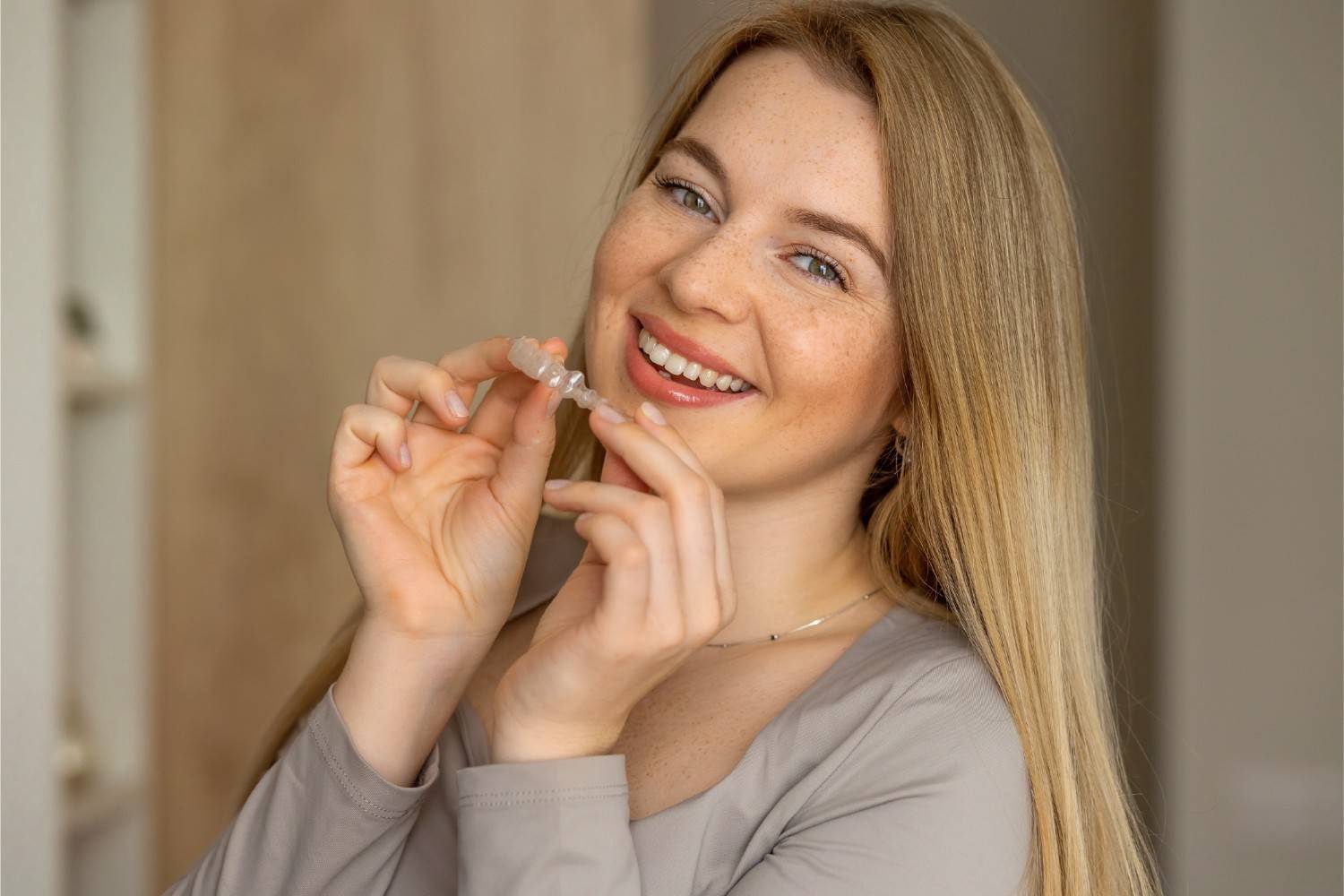
Clear braces use ceramic brackets bonded to the teeth. They function similarly to traditional braces but are designed to blend more naturally with enamel. Invisalign uses a series of custom plastic aligners created through digital treatment planning and 3D scans. These aligners gradually shift teeth and are removed for meals and brushing. From a clinical perspective, both are precise tools. The choice often depends on how they integrate into daily life.
Clear Braces vs Invisalign: Pros and Cons
Clear braces work continuously. Because they are fixed, there is no need to remember to put them back in after meals. This can be reassuring for teenagers or busy adults who prefer a system that does not rely on removability.
However, food restrictions with braces apply. Sticky or hard foods must be avoided. There is also a mild stain risk on ceramic brackets if hygiene is inconsistent, particularly with coffee or deeply pigmented foods.
Invisalign offers removability of aligners for meals. There are no food restrictions, which many patients appreciate. Brushing and flossing may feel simpler without brackets in place. The trade-off is responsibility. Aligner wear time, 20 to 22 hours a day, is essential for effectiveness. Leaving them out for extended periods can slow progress.
Comfort of plastic aligners vs brackets varies by patient. Some prefer the smooth feel of aligners. Others adjust quickly to ceramic braces and appreciate not having to track removable trays.
Lifestyle Matters
When families ask, "Which is better, clear braces or Invisalign?" I often shift the focus slightly. The better question is: which fits your routine?
For teenagers managing school, sports, and social events, consistency is key. If remembering to reinsert aligners feels manageable, Invisalign can work well. If not, clear braces may offer more structure.
For busy adults, clear braces vs Invisalign for adults often comes down to work schedules. Some appreciate removing aligners during important meetings. Others prefer a fixed option that requires less daily decision-making. Office visits and adjustment frequency are similar for both systems, though aligner treatment may involve more digital progress tracking.
Clear Braces vs Invisalign Cost
What you spend depends more on case complexity than appliance type. Budget and insurance considerations are discussed openly during consultation. We review coverage, out-of-pocket costs, and available payment structures before treatment begins. The decision should not rest solely on cost. Treatment choice should first reflect clinical suitability and lifestyle alignment.
Severity of Misalignment and Treatment Choice
Certain cases respond equally well to both systems, particularly mild to moderate crowding. In more complex situations, such as significant bite correction, one option may provide mechanical advantages.
Clear braces vs Invisalign effectiveness ultimately depends on the specifics of your alignment. This is why an in-person evaluation matters. Digital scans, photographs, and bite analysis allow us to recommend a solution grounded in accuracy, not preference.
FAQs
Q. Is Invisalign more effective than clear braces?
A. Both are effective when used appropriately. Suitability depends on the severity of misalignment.
Q. Do clear braces stain easily?
A. Ceramic brackets can discolor if hygiene is inconsistent, but proper care minimizes risk.
Q. Are aligners more comfortable than braces?
A. Some patients prefer the smooth feel of aligners. Others adjust quickly to braces. Comfort is subjective.
Q. Which option is more discreet?
A. Both are considered discreet. Invisalign may be less noticeable at close range.
Q. Is one faster than the other?
A. Treatment time depends on case complexity, not solely on appliance choice.
At our Sonoma and San Francisco offices, we evaluate each patient carefully before recommending clear braces or Invisalign. Every treatment plan is designed around alignment needs, daily routines, and long-term oral health.
If you are considering clear braces or Invisalign in California, schedule a consultation at our Sonoma or San Francisco office so we can review your alignment, discuss your lifestyle, and determine the most appropriate treatment option.
Conclusion
Clear braces vs Invisalign is not a question of which system is superior. It is a question of fit. Orthodontic care should support your daily life, not complicate it. When treatment aligns with both clinical needs and routine habits, progress feels steady and manageable. With careful evaluation and realistic expectations, either option can lead to a healthy, confident smile.
Must Read
Loading...