Lingual Braces vs Invisalign: Which Is Right for You?
Key Takeaways:
- Lingual braces vs Invisalign both offer discreet orthodontic solutions for adults.
- Lingual braces are fixed behind the teeth, while Invisalign uses removable alignment trays.
- The right option depends on lifestyle, treatment compliance, and case complexity.
- A detailed orthodontic evaluation helps determine the most appropriate choice.
This question usually comes up during a quiet moment in conversation. An adult patient leans forward slightly and asks, “Is there a way to straighten my teeth without anyone noticing?” Sometimes it follows a work presentation. Sometimes it comes after looking at photos from a recent event.
When we talk about lingual braces vs Invisalign, the focus is not only on how the appliances work. It’s also about how they fit into daily life, like meetings, meals, conversations, and routines that don’t pause for treatment.
What This Blog Covers
- Understanding Lingual Braces
- Understanding Invisalign
- Lingual Braces vs Invisalign: Practical Differences
- Case Complexity and Suitability
- Cost Considerations
- Daily Life Considerations
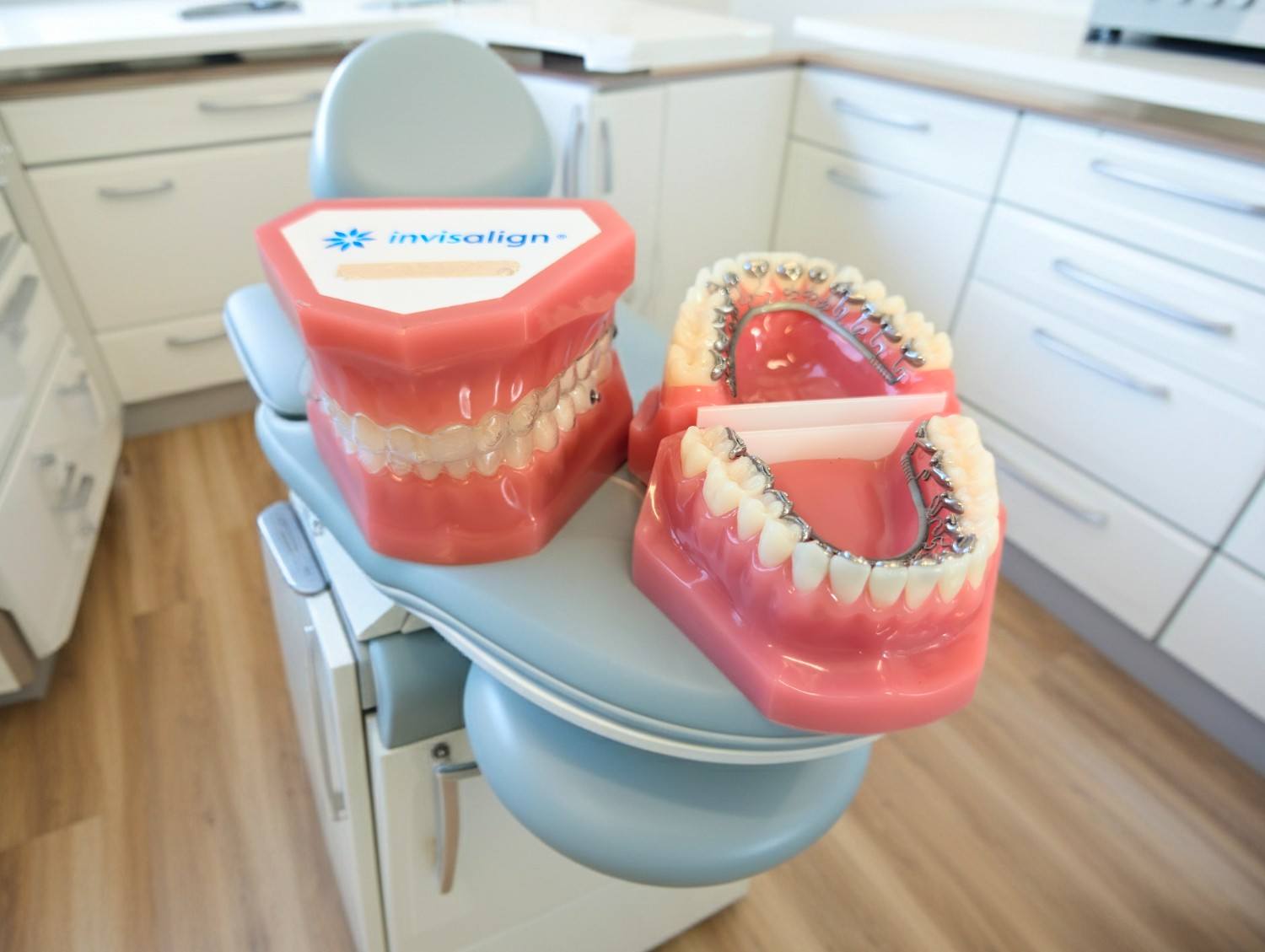
When comparing lingual braces vs Invisalign, lingual braces are fixed appliances placed behind the teeth, offering complete orthodontic discretion without removal. Invisalign uses removable alignment trays that must be worn consistently. The best choice depends on treatment compliance, case complexity suitability, and how each option fits into your daily routine.
Understanding Lingual Braces
Lingual braces are custom lingual appliances placed on the inner surface of the teeth. Because bracket placement is behind the teeth, they remain hidden during normal conversation and smiling.
For patients seeking hidden braces vs Invisalign options, lingual braces provide a fixed solution that does not rely on daily removal.
There is, however, an adjustment period. Many patients notice a tongue adaptation period in the first few weeks. Speech may feel slightly different at first, especially in professional settings, though this typically improves as the mouth adapts.
Oral hygiene challenges can also require more attention, particularly during evening routines.
Understanding Invisalign
Invisalign uses a series of clear alignment trays that are removable. These trays gradually shift teeth based on a pre-planned sequence.
For adults exploring discreet braces for adults, Invisalign often feels more flexible. Aligners can be removed during meals, brushing, and social situations.
That flexibility requires consistency. Treatment compliance is essential. Aligners should be worn approximately 20–22 hours per day to remain effective.
Small tooth-colored attachments may be placed to guide movement, depending on the case.
Lingual Braces vs Invisalign: Practical Differences
When patients compare lingual braces vs Invisalign, the conversation usually centers around routine.
Lingual braces work continuously. There is no need to remember to reinsert them after meals or meetings. This can be reassuring for individuals with busy schedules.
Invisalign offers removability. For many adults, this makes it easier to manage meals, oral hygiene, and professional interactions. At the same time, it introduces responsibility, aligners must be worn consistently to maintain progress.
Speech impact is another consideration. Lingual braces may affect speech briefly during the initial adjustment period. Invisalign typically has minimal impact on speech.
Neither option is universally better. The decision depends on how each integrates into daily life.
Case Complexity and Suitability
Not every orthodontic case is the same.
Lingual braces are often well-suited for cases requiring more controlled tooth movement, particularly when continuous force is beneficial.
Invisalign can address many alignment concerns effectively, especially mild to moderate cases. In more complex situations, additional planning, refinements, or alternative approaches may be recommended.
When patients ask, “Which is better lingual braces or Invisalign?”, the answer depends on alignment needs rather than preference alone.
Cost Considerations
Cost varies depending on treatment complexity and duration.
When comparing Invisalign vs lingual braces cost, both options are typically within a similar range, though lingual braces may sometimes be slightly higher due to customization and placement technique.
We review costs carefully during consultation, including payment options, so patients can plan in a practical way.
Daily Life Considerations
For adults balancing work, family, and social commitments, treatment must feel manageable.
With lingual braces, the structure is built in. Once placed, they require consistent care but no daily decisions about wear.
With Invisalign, flexibility is greater. Aligners can be removed, which suits many routines. At the same time, remembering to wear them consistently becomes part of the day, similar to maintaining a habit.
For parents, this conversation often extends to teens as well, where routine and responsibility play a larger role.
FAQs
Q. Are lingual braces completely invisible?
A. They are placed behind the teeth and are not visible from the front.
Q. Is Invisalign easier to manage?
A. It can be more flexible, but requires consistent wear for effectiveness.
Q. Do lingual braces affect speech?
A. There may be a short adjustment period, but most patients adapt over time.
Q. Which option works faster?
A. Treatment timeline depends on case complexity rather than appliance type.
Q. Are both options suitable for adults?
A. Yes. Both are commonly used in adult orthodontics.
At our San Francisco and Sonoma offices, we offer both lingual braces and Invisalign as part of a comprehensive approach to adult orthodontics. Each treatment is planned carefully to align with clinical needs and everyday routines.
If you’re deciding between lingual braces and Invisalign, schedule a consultation to review your alignment and determine which option fits your lifestyle best.
Conclusion
Choosing between lingual braces vs Invisalign is not about selecting the most discreet option alone. It is about selecting the one that fits naturally into your life.
Orthodontic treatment works best when it becomes part of your routine, steady, manageable, and aligned with your daily habits. With careful evaluation, both options can provide reliable, long-term results.
Must Read
Loading...